Something Smells Like BS, It's Not The Biosolids
NCDEQ recently released results from its 2023 PFAS biosolids study. We reviewed the data for the Northeast Brunswick Regional Wastewater Treatment Plant in Supply, NC, which serves both residential and industrial customers through Brunswick County Public Utilities.
Here’s what stands out:
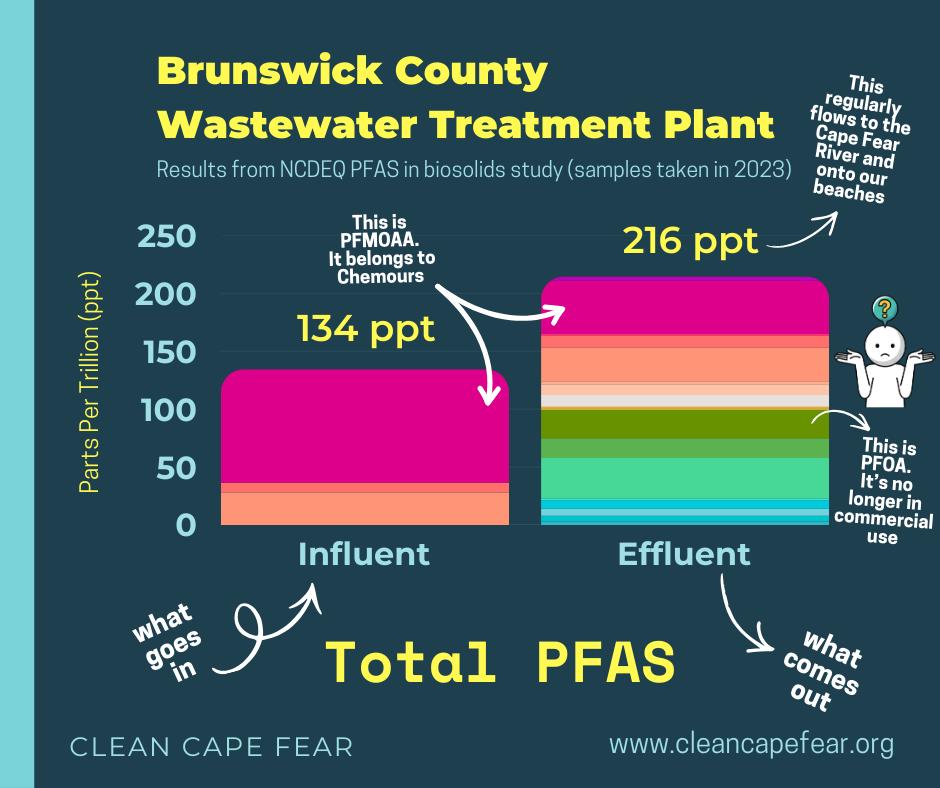
134 ppt of total PFAS was detected in the influent (the raw sewage entering the plant).
216 ppt of total PFAS was detected in the effluent (the treated liquid discharged into the Cape Fear River) which flows directly along our Brunswick County shorelines. We are already seeing extreme PFAS levels in sea foam on local beaches.
The dominant compound entering the system was PFMOAA (73% of influent PFAS) which is a Chemours-specific PFAS.
The effluent also contained 24 ppt of PFOA, a chemical phased out of U.S. production over a decade ago. For comparison, EPA’s drinking water standard for PFOA is 4 ppt.
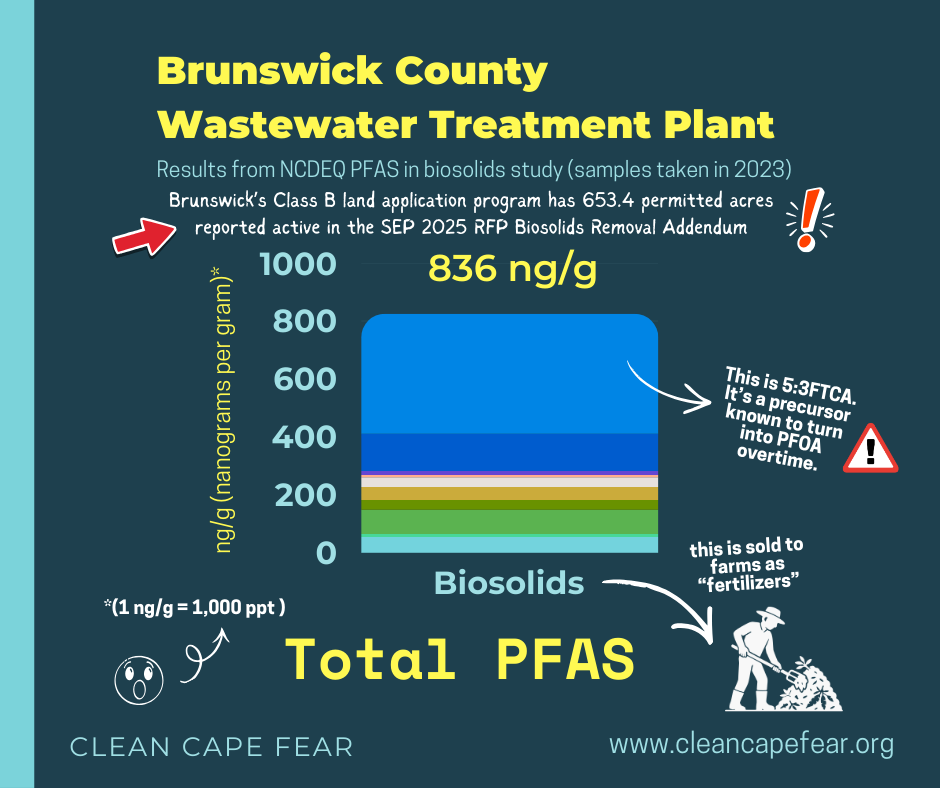
The biosolids contained 836 ng/g of total PFAS. Since 1 ng/g equals 1,000 ppt, that translates to 836,000 ppt of total PFAS in land-applied sludge.
Half of the PFAS in the biosolids was 5:3 FTCA, a precursor known to convert into PFOA over time.
Brunswick County’s Class B land application program for these biosolids lists 653.4 permitted acres as active in the September 2025 RFP Biosolids Removal Addendum. That means this PFAS-contaminated material is being spread on land as “fertilizer.”
By contrast, in New Hanover County Cape Fear Public Utility Authority voluntarily tested its biosolids for PFAS in 2017 and stopped land application in 2018 after contamination was confirmed.
Meanwhile, a non-publicly elected state environmental commission controls the power to approve statewide PFAS water quality standards that would provide no additional protection against ongoing exposures. It's a proposal some environmental experts have called worse than doing nothing.
So, what can Brunswick County residents do?
Tell county commissioners to stop land application of toxic PFAS in biosolids. Attend commissioner meetings and give public comments. Click here to find contact information.
Contact your state lawmakers and tell them to abolish the EMC. The Environmental Management Commission has long served as an excuse by both political parties to hamstring NCDEQ’s regulatory authority. It’s now hyper politicized, dysfunctional, and controlled by the chemical industry and its allies. Click here to find your state legislators.
Sign our petition requesting Gov. Josh Stein say “No More Chemours!” Chemours has been seeking approval from NCDEQ to expand and make more PFAS. Meanwhile communities like ours are suffering and burdened with paying the clean up costs.